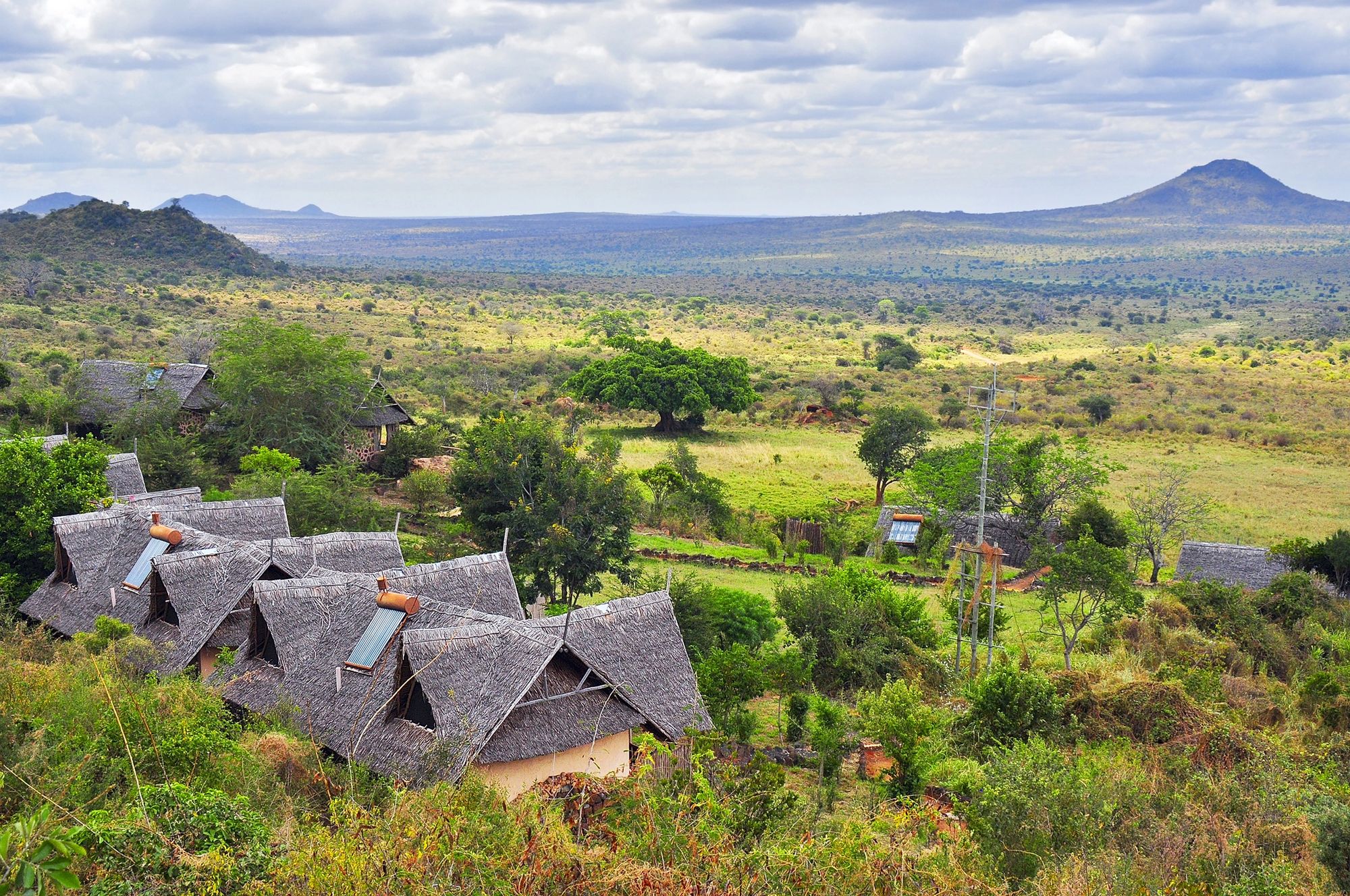
The choice
It is a question about size, not about canvas
The tent-versus-wall distinction is the one people debate. The one that actually changes a week is how many other guests there are.
| Small tented camp | Lodge | |
|---|---|---|
| Typical size | 6–12 tents | 20–40 rooms |
| Departure times | Bend to the guests | Set by the operation |
| Meals | When you come back | Service times, buffets at the larger ones |
| Noise at night | Everything, which is the point | Muffled by walls |
| Warmth | Hot water bottles and a fire | Solid, sometimes heated |
| Children | Minimum ages are common | Usually more accommodating |
| Pool and spa | Rarely | Often |
| Feels like | A camp | A hotel with animals nearby |
Why size decides the day
A camp of eight tents has sixteen guests and a kitchen that knows all of them. If you want to leave at five, take breakfast in the vehicle and come back at eleven, that is a conversation at dinner the night before.
A lodge of thirty-six rooms cannot do that, and it is not a failing — it is arithmetic. Seventy people need service times, a breakfast room and a schedule, and the schedule belongs to the building.
On a safari the best hour is the one either side of dawn. Whether your accommodation can put you in it is the single most consequential difference between these two forms.
Where a lodge is genuinely better
- Cold at altitude. Laikipia and the Rwandan highlands get properly cold at night, and walls hold heat that canvas does not.
- Small children. More space, fewer minimum-age restrictions, a pool, and no walk to a tent in the dark.
- Nervousness about canvas. A real and reasonable preference, and a bad first night costs more than the upgrade would have.
- The first or last night of a trip, where the job is a bed near an airport rather than a safari.
- A rest day in the middle of a long trip, which a pool and a spa do better than a tent does.
Where a camp is genuinely better
Everywhere the wildlife is the point. Small camps sit closer to the ground in every sense: fewer people at a sighting from your own camp, a guide who is yours for the stay rather than rostered, and mornings that start when the light does.
They also sit on more interesting land, because a twelve-tent camp is what a capped conservancy lease permits and a forty-room lodge usually is not.
The mixed answer, which is usually right
A lodge for the arrival night and again at the end. A small camp for the heart of the trip. If the party includes children or someone who has never slept under canvas, a lodge first and a camp second lets the canvas arrive after the place has stopped being unfamiliar.
It is the ordinary answer and it is ordinary because it works.
Ready to turn this into a real itinerary?
Send us your dates, who is travelling and roughly what you want to spend per person per night. Our Africa specialist comes back within 24 hours with a plan built around them and a costed quote.